

 Regular priceFrom $4500 AUDUnit priceUnavailable

 Regular priceFrom $32500 AUDUnit priceUnavailable

 Regular priceFrom $70500 AUDUnit priceUnavailable

 Regular priceFrom $24544 AUDUnit priceUnavailable

 Regular priceFrom $15000 AUDUnit priceUnavailable

 Regular price $60400 AUDUnit priceUnavailable

 Regular price $1,56800 AUDUnit priceUnavailable

 Regular price $30700 AUDUnit priceUnavailable
 Regular price $39552 AUDUnit priceUnavailable
 Regular price $28700 AUDUnit priceUnavailable
 Regular price $66900 AUDUnit priceUnavailable


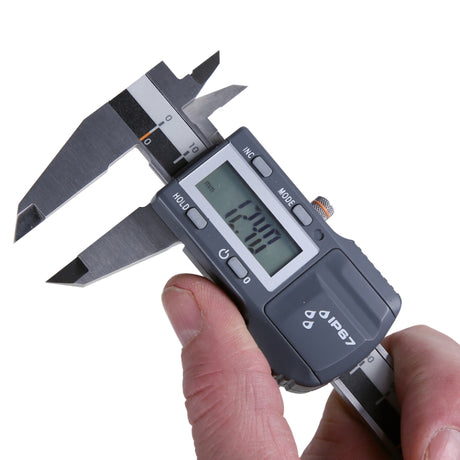
Before buying a vernier caliper or digital caliper, consider the following factors to ensure you choose the right tool for your needs:
- Accuracy and Precision: Determine the level of precision required for your measurements. Digital calipers generally offer higher precision than vernier calipers. Consider the tolerances of your measurements and choose accordingly.
- Ease of Use: Consider your familiarity with using calipers and your preference for reading measurements. Digital calipers provide easy-to-read digital displays, while vernier calipers require interpreting scale markings. Choose the type that you find most comfortable and convenient to use.
- Environment: Consider the environment in which you will be using the caliper. Digital calipers may be more susceptible to damage from moisture, dust, or extreme temperatures due to their electronic components. Vernier calipers, with fewer electronic parts, may be more durable in certain environments.
- Additional Features: Determine if you require any additional features such as data output, zero setting, or conversion between different units of measurement. Digital calipers often offer these extra features, while vernier calipers provide basic measurement capabilities.
- Calibration and Maintenance: Consider the ease of calibration and maintenance for the caliper. Both vernier and digital calipers require periodic calibration to ensure accuracy. Ensure that you can perform calibration procedures easily and that the caliper is built to withstand regular use and maintenance.
Frequently Asked Questions
How much weight can a heavy duty jack stand hold?
How much weight can a heavy duty jack stand hold?
Capacity varies by model and is stated on each product page. Check the rating for the specific stand you are using, and always work in a matched pair.
Do I need 3 tonne or 6 tonne jack stands?
Do I need 3 tonne or 6 tonne jack stands?
Work from the weight that will sit on the pair of stands rather than the vehicle’s total weight, then allow a margin above that figure.
Should jack stands always be used in pairs?
Should jack stands always be used in pairs?
Yes. A matched pair set to the same height spreads the load evenly and keeps the vehicle level while you work.
Can a vehicle be left on jack stands overnight?
Can a vehicle be left on jack stands overnight?
Stands are made to hold a static load, so a longer job is fine on level, solid ground. Check the vehicle is still sitting square each time you return to it.
What working height do I need for a truck or 4WD?
What working height do I need for a truck or 4WD?
Measure from the ground to your support point with the wheels off. The tallest 3010H and 3010V models reach 1077 mm and 1090 mm respectively.
Browse the full range of Beta Tools jack stands, or talk to the UNIPAC team about matching stands to the vehicles you work on.